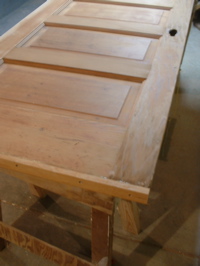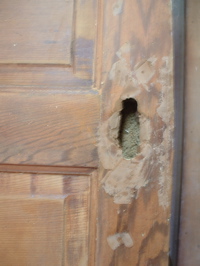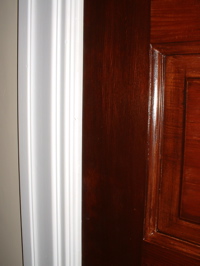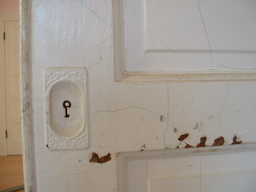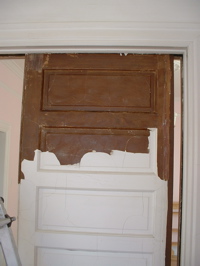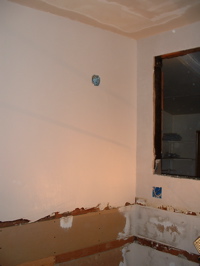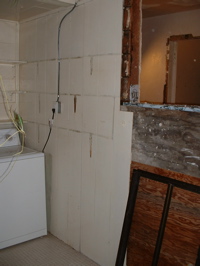
full steam

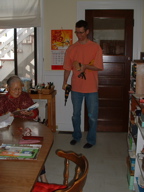
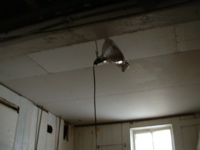
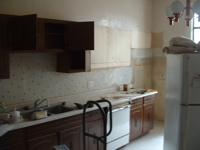
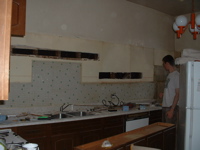
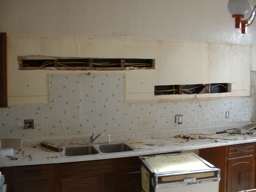
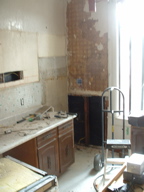
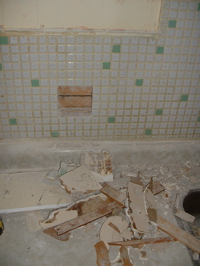
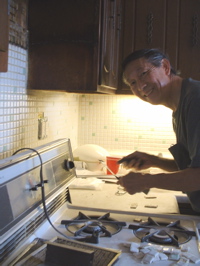
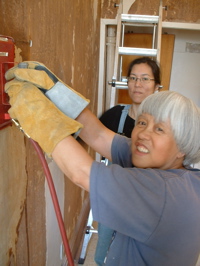
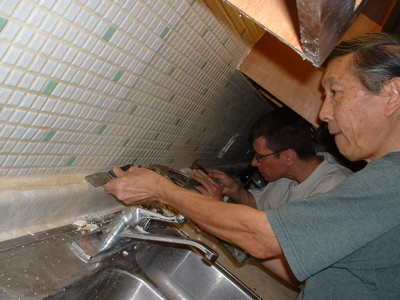
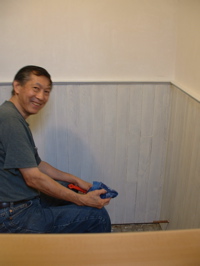
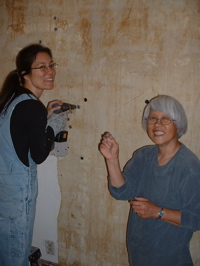
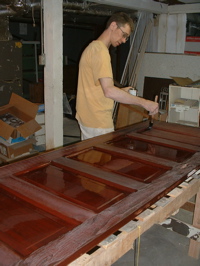
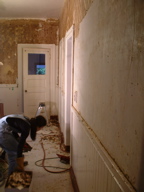
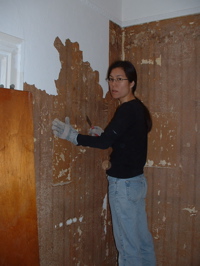
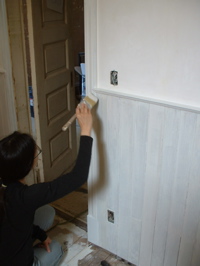
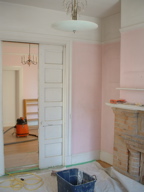
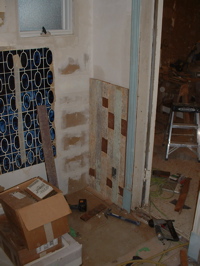
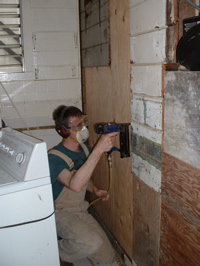
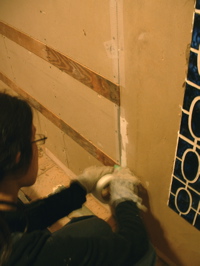
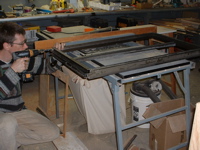
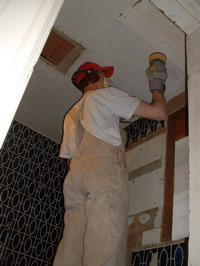
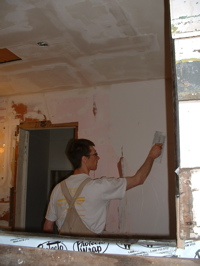
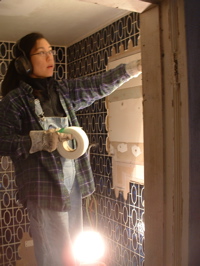
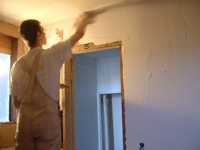
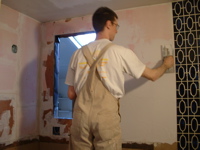
We rented the wallpaper steamer again this weekend and finally finished steaming the layers of wallpaper and paint off the walls in the office…
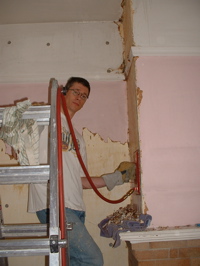
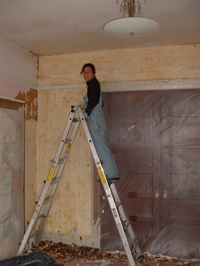
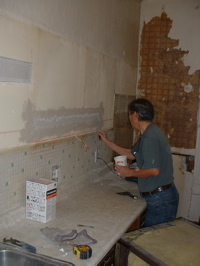
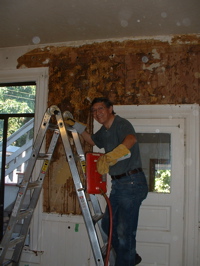
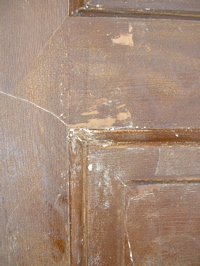
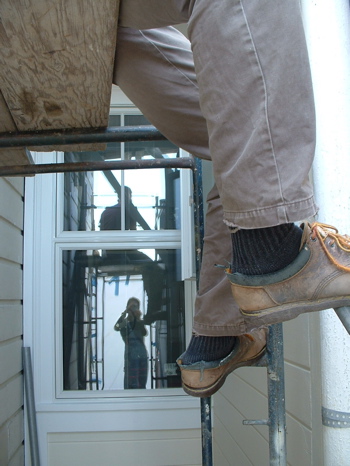
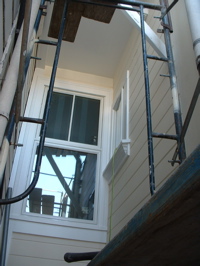
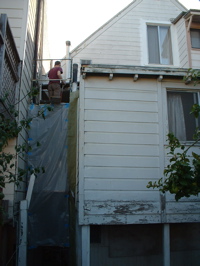
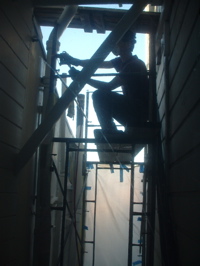
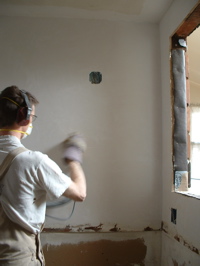
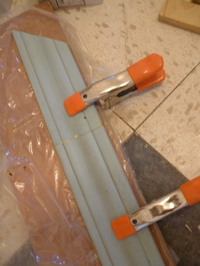
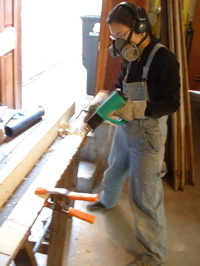
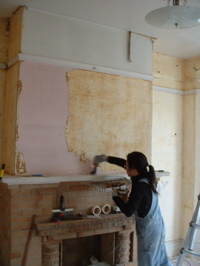
We’d removed the lower half of the wallpaper already, so now it was all working up ladders. The photos make it look like it just happened quickly, but it was slow going: We had to scratch up the surface of the wallpaper so that the steam could get through the paint, and then it was about four passes on every foot square to get down to the plaster.
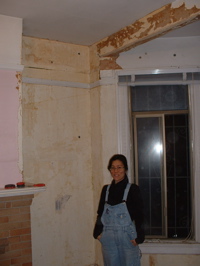
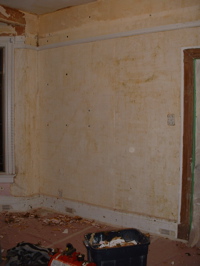
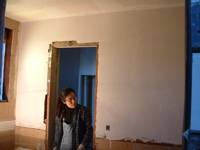
At the end of Saturday, we’d got through most of the room: Just the area above the windows and the wall over the fireplace left to do.
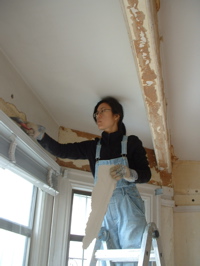
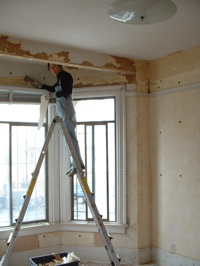
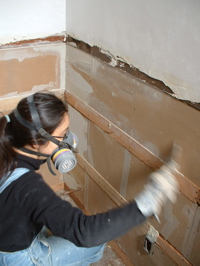
Janeen found that steaming went much faster if she scraped off as much of the paint as possible before trying to steam. In some places, the wallpaper would partially separate, or some of the paint layers would come loose. Those were the fun bits.

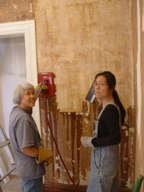
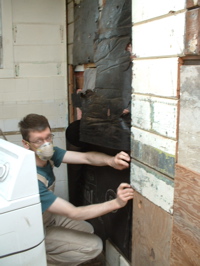
In some places, it seemed like the wallpaper had been attached with some type of superglue: we’d steam it for a couple of minutes, and still the wallpaper would only come off in tiny little 1/2″ pieces, then we’d steam and scrape and steam and scrape… In the photo above right, there’s a bin below janeen: we completely filled that with soggy wet wallpaper scraped off the walls.
unclear on the concept

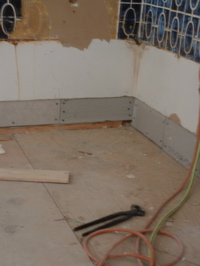
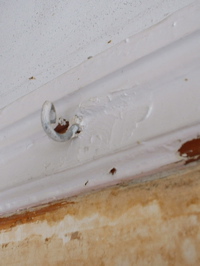
The photo above right is titled “unclear on the concept.” The previous owners screwed a hook into the picture rail: what did they think picture rails are for if not to hang pictures from?
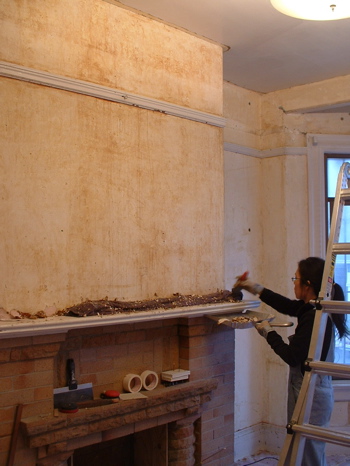
janeen cleaning up wallpaper scrapings

I love the look of the plaster after the wallpaper has been removed. It’s a pity that this house has such cracked plaster, as I’d love to find a way to just keep it as it is. The mottled yellow/orange color and the smoothness of the 100 year old plaster are impossible to replicate, and paint seems so bland in comparison.
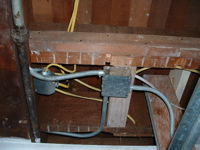
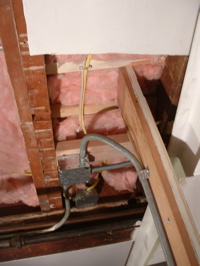
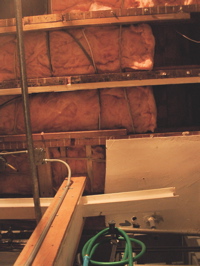
I also got some of the insulation into the floor in the area we were doing electrical work; not easy to jamb fiberglass insulation around all that conduit, wire, framing…

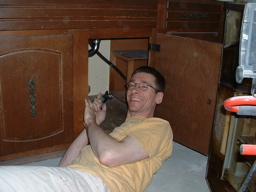
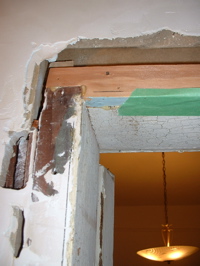
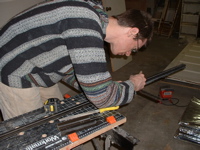
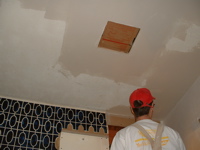
The photo below right shows the beam that was added to the house when they put in the garage in the 50’s: I never noticed before, but it’s BENT! Much of the cracking in the plaster was caused, I think, when they did the garage addition. The beams they used were not stiff enough, and deflected too much, cracking the beautiful plaster walls in the process: Cars and architecture are not friends. I also added a 2×6 on the front and back to make sure the beam stays on the post in an earthquake (wouldn’t want it falling off, or the post falling over!) Now I just need to get plaster board back on the ceiling.
Getting all the wallpaper off the office walls makes things feel like they are moving again: now we’ve just got to fix the plaster, strip the paint off the woodwork, sand, stain, seal, paint, replace the windows, make the built-in furniture… almost done. ahem.
slowing down

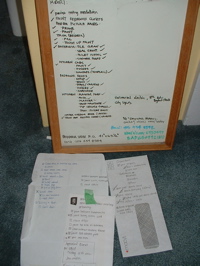
lists_20091124Now that Popo has moved in, we have slowed down a lot. It’s been over two years of working nonstop on the house. The photo shows a few of the checklists we made — with everything checked off. Feels a bit like I am climbing out of a hole that I’ve dug for myself! Hmm. Mole references…
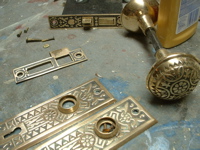
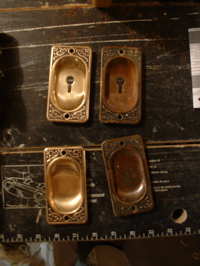
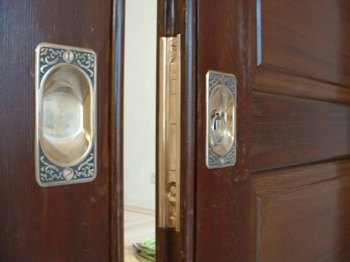
Over the past couple of weeks, we finished up the back door and put it back on. The laundry room and ‘tear-off’ room leak a lot of cold air, so the kitchen had been rather drafty. The hardware for the original door was some of the nicest decorative brass on all the doors (below left). This is the original brass hardware for the back door after Janeen and I polished it up and removed all the old paint.

backdoor3_20091124backdoor2_20091124

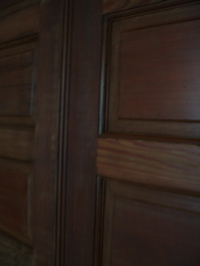
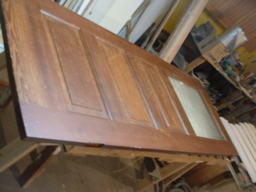
The door was stripped, carefully sanded, stained with “Early American” oil based stain and then two coats of integrally colored polyurethane “Natural Cherry”. I sanded the polyurethane between coats with a very fine grit (220) sand paper to help the polyurethane adhere better, and also remove any dust or roughness that got into the first coat of urethane. The doors all have an aged but cared-for look to them now, and the color polyurethane helps to unify the color of the door, filling, and any blemishes.

backdoor1_20091124backdoor4_20091124

Above right, you can see the door installed in the background.

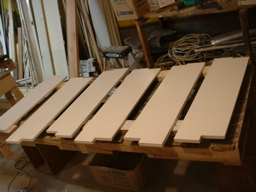
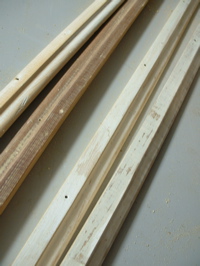
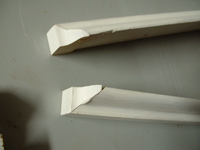
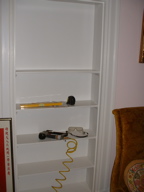
I also made some built-in shelves for the living room. In the space where there used to be a door between the living room and the bedroom, we now have built-in shelves for photo albums. I found pieces of wood for the shelves in the rather extensive pile of wood I’ve built up. Also the trim that holds them up is recycled:

shelves1_20091124shelves2_20091124

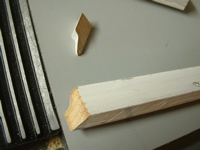
To make the front edge of the trim look finished and more decorative, I cut off and bevelled the trim, and added a piece of the same trim to return it to the face of the wall. Below right is a matching pair (left and right side).

shelves3_20091124shelves4_20091124

shelves6_20091124 shelves5_20091124

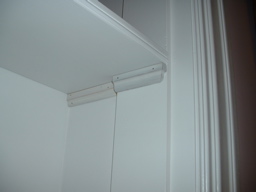
Above are the shelves as they are being installed. I had a bit of a dilemma: when in an old house where the floors, ceiling, doors (everything) slopes at various angles, do you install shelves so they slope the same as the floor? the tops of the doors? the ceiling? or ignore all that, and make them horizontal? I decided to make them slope the same as the top of the old doorway, so the shelves and the trim will at least both have the same slope…
While Janeen was out of town (she went to visit her “sisters” up in Seattle), I put insulation and gyp board on the ceiling of what used to be a bit of a scary little room in the garage. The photo below left shows it as it was a couple of years ago. Below right is with the gyp board on the ceiling, all the piping and wiring are now hidden.

garageroom1_20091124

The kitchen is quite moved in. Popo is doing her ‘homework’ (as she calls it). In the background you can see the outdoor steps in the back yard that go up to our unit and still need much work…
popo_20091124

help!

So now we’ve got a real deadline: Po-Po has decided that, in fact, she does want to move in here. We gave her a firm date of the end of September. We need to finish the kitchen, bathroom and bedroom by then!

Janeen’s parents came here both days last weekend, and they worked really hard. I also took a few days off work to get the kitchen moving faster.

01_kitchencabs-09071602_kitchencabs-holes

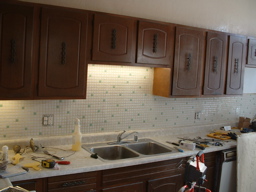
I took down the cabinets to get wiring in for additional plugs and under cabinet lights. It was surprisingly quick to string the wires in and add the plugs. Had to cut some new holes into the tile, and big gashes into the wall…

05_kitchen-wiresin06_kitchen-wiresin2

Then John showed up and fixed all my messes. He patched in tile where I’d broken it out.

03_kitchen_plug07_kitchen-johnmixing

And taped and plastered over the holes in the walls. Meanwhile, Janeen and her mum worked with a wallpaper steamer that we’d rented to take all the old wallpaper and many layers of paint off the walls in the bedroom.

09_kitchen-patching08_bedroom-steaming

The photo below shows John and me getting perfectionist about the caulk on the edge of the old tile. The person who had put in the tile had failed to polish off the grout from the surface of the tile when they put it in, so the tile all had patches of grout; we scraped and chipped it off. They’d also used grout where they should have used a flexible caulk – at the interface between the counter top and the tile – so it had cracked; chipped that off too.

15_kitchen-chippingcaulk

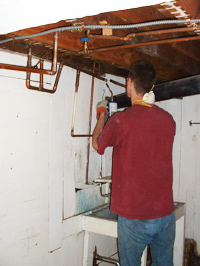
The photo below is of me plumbing the dishwasher drain hose into an “air gap”. Previously, it had been directly fed into the drain, but the air gap prevents water backing up in a blocked sink and emptying into the dish washer (a good thing, I’d say). Janeen and Judy had become pros with the steamer by now. I wish we’d known about this tool before.

10_kitchen-plumbing11_bedroom-steaming

Not content with a solid day of work, they came back for more punishment the next day. John caulked the gaps in all the wainscot boards and helped me put the cabinets back in. Janeen and Judy moved on to steaming the kitchen. The photo below right shows them installing plaster washers as a team. I think Judy thought her job (assembling the screw onto the washer) was too easy.

12_bathroom-caulkingwainscot16_bedroom-plasterwashering

I went and hid down in the garage and put the final coat on the door that goes to our hallway. I think John thought the steamer looked like fun, so he took it and did a wall.

13_halldoor17_kitchen-johnsteaming

Below left you can see the mess we’ve got the kitchen into. Not quite finished steaming off the wallpaper here. We suspect that grease in the air has made the wall paper much more water resistant, so steaming in the kitchen went very slowly. The special scoring tool would cut right through the wallpaper and damage the plaster, so it wasn’t much help. Sanding the wallpaper helped a bit. Below right shows the kichen cabinets back up, and the new under cabinet lights on.

19_kitchen-majorcleanup20_kitchen-cabinetsup

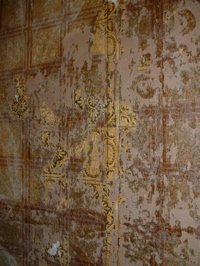
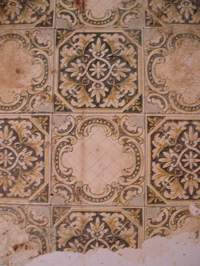
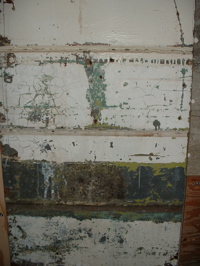
Here are a couple of photos of the old wallpaper in the kitchen.

04_kitchen-wallpaper18_kitchen-oldpaper

and another door

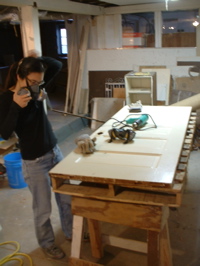
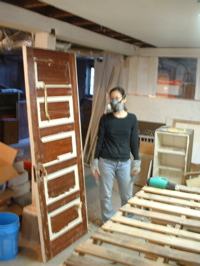
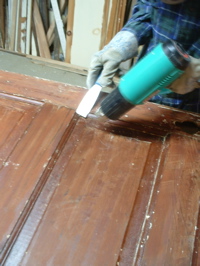
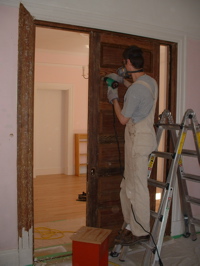
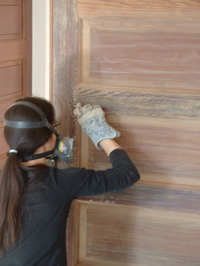
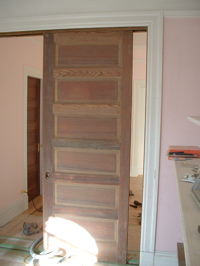
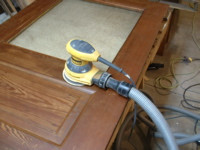
done a lot of door sanding and finishing lately. this is the door between the hallway of the downstairs unit and the hallway that leads to the upper unit. i’ve developed some techniques that makes it go faster. first we strip off the paint from all flat surfaces. on the first pass, i just work to get as much of the paint off as quickly as i can. janeen is really good at getting paint off the intricate areas of molding.

Door to upstairs before stripping03doorpartiallystripped

after getting all the paint off, then we do a second pass to clean up the edges and corners, and missed paint. it works much better to do two passes, because if the paint gets too hot, it melts and smears into the wood.

04doorpaintoff05doorcleaninguppaint

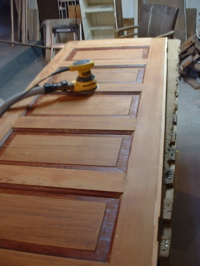
Then sanding. sanding the flat areas is really fast. the intricate bits are really, really slow though. i’ve added a piece of wood at the bottom of the door. it still needs trimming and filling in the photo below.

06doorsandingstarted08dooraddingbottom

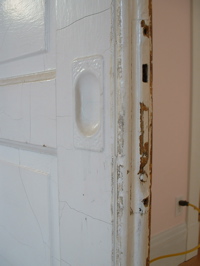
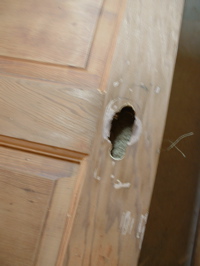
i guess the old door hardware did not work very well, so they installed modern hardware. To do that, they drilled out a large hole in the door where the hardware attaches. i’m trying to go back to traditional hardware, so i’ve filled most of the hole that was cut out of the door. The remaining part will be covered by a brass cover plate.

07doorfilling09doorsandingfiller

janeen couldn’t resist doing more paint scraping in the downstairs bedroom (below left). we also primed the wainscote in the downstairs bathroom.

10janeenscrapingpaint12paintingwainscote

13paintedwainscote11deskclamping

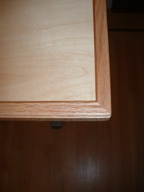
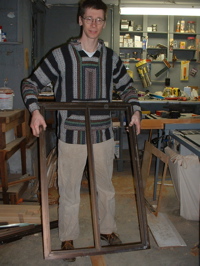
i made the top for janeen’s standing desk. got a bit fancy with the edge of the desk, using a 1/8″ thick strip of redwood as an accent. it would look better if the edging were maple (like the veneer on the plywood.) the accent strip would hide the join and look decorative. but i had left over oak from doing the floors, so used that. now it’s an amalgam of woods!

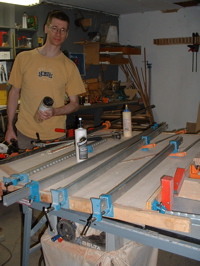
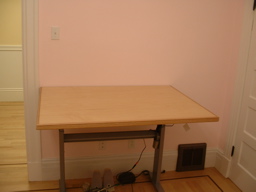
photo above right: almost all my clamps were needed to clamp on the edging while the glue dried. the desk isn’t finished: i still need to make draws. below: the desk in its temporary home, until we get the office done.

00desk01desk

Living Room Doors

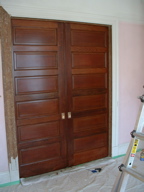
We finished one more thing on the list: the doors between Janeen’s office and the living room. After stripping all the paint off the doors, we carefully sanded the doors.

Sanding living room doors2livingrmdoors

I then stained the doors with an oil based stain called ‘Old American’. It’s actually a lot more yellow than the photo below right shows. Below left you can see the door before it was stained.

3lrd_before-stain 4lrd_stain

We had some trouble at first figuring out how to strip the paint off the old brass door hardware. It’s much more delicate than the steel hinges, so we couldn’t attack it with a wire brush and heat gun. At first we tried using the heat gun, but the paint just wouldn’t come off completely. Chemical paint stripper and a toothbrush did the trick beautifully, though. And it didn’t damage the black oxide background to the patterns on the hand grips. They then polished up nicely with Brasso. Below right you can see how they looked on the door before.

5lrd_handlespolishedLiving room door handles before

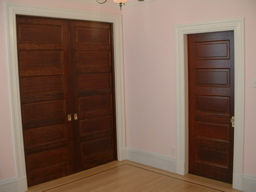
After two coats of oil based color polyurethane (‘cherry’), the doors are done.

8lrd_fromoffice7lrd_fromlivrm

I reinstalled the brass hardware, and after a bit of adjustment, it all works quite nicely. The doors are not perfect, but I like the slight dents and imperfections: the doors are 100 years old, after all.

6lrd_handles-installed

Janeen took the photo below. I think she was trying to decide if these are good work boots. The photo on the right shows the stain rags, air drying. Apparently if you bundle them up in a plastic garbage bag when wet, they can spontaneously catch fire. Not good in a wood house.

9jashoes9rags

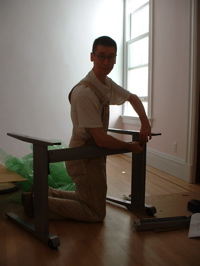
We ordered a fancy new desk for Janeen: It’s height can be adjusted electrically, to be a standing or sitting desk. I need to make a top for it, though. Until we get the office complete, the living room will be Janeen’s office.

9desk1-assembly9desk2-assembly

doors

Right now it feels like we are moving in slow motion. We have got the bathroom to a point where it’s ready to paint. Before we can get the bedroom finished, we need to rent the insulation blower again, and fill the walls with insulation. But all of Janeen’s office furniture is currently in the kitchen (we moved it there before doing the floors). To clear it out, and finish the bedroom and kitchen, Janeen is going to move her office into the downstairs living room while we work on the kitchen and bedroom. This way, we can move onto working on her office without moving all the furniture again.

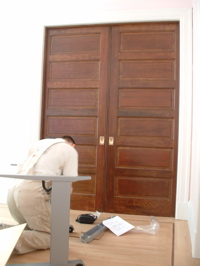
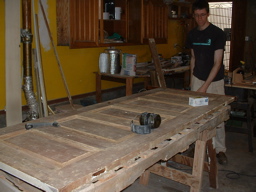
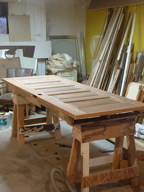
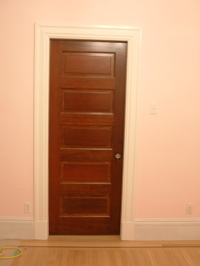
I’ve spent the last couple of weeks trying to get the downstairs living room finished and sealed off. Until now, the door into the living room has been siting in the garage. Janeen had already stripped the paint off the door, and done most of the sanding. Time to stain and finish it.
01_livingrmdr_sanding02_livingrmdr_sanded

03_livingrmdr_done04_livingrmdr_done

The stain turned out quite a bit darker than I had planned, but I think it looks ok next to the white trim. Also,  I started finishing the double doors that lead between the front and the living room.

To seal the living room from the front room (Janeen’s office), I need to finish the double doors that lead between the two rooms. Janeen has already stripped the paint from one side. The doors had been varnished originally, then painted over in white at some time. It’s obvious there was some incompatibility between the paint and the varnish, as the paint had gone all cracked. The photo on the right below shows the chipped paint, and also the random lines of cracking in the paint.

05_livingrmdbl_before06_livingrmdbl_before

Stripping off the old paint went really fast, as the old finish must have been waxed. Upon applying the heat gun, the paint just bubbled up and fell off in sheets, exposing the old finish. The finish was a faux wood grain, on top of wood! It’s a pity I could not save the old finish. It’s much too damaged. The faux finish must have given a uniform appearance, and made the doors look like hardwood, instead of beautiful old-growth douglas fir. Well, I’m no faux finisher. We’re just going to use stain and polyurethane.

07_livingrmdbl_strippingpt08_livingrmdbl_oldfinish

back to work

We haven’t made a post in a while: It’s because we got some rather unmotivating news; Po-Po has decided that she wants to move into a nursing home. The amount of time this is taking us has probably played into it a bit, but mostly she’s concerned that she does not want to have to cook, wants to have a nurse on call, and does not want to clean. All of this we can come up with ways to do, but also, she’s planning to move into a place with her sister-in-law. We understand that it may be lonely still living downstairs here, even though we are here. But at the rate we are working, she can go check out a nursing home for a few months; if she doesn’t like it or changes her mind, she’ll still be welcome here when we’re done!

We are now floating ideas of what we will do with the downstairs: Maybe a vacation rental?

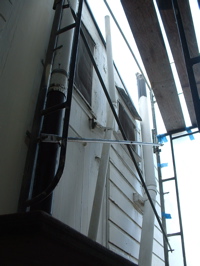
coolscaffoldphoto

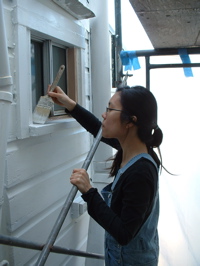
I finally got the window trim back on, painted: finished. then we moved the scaffolding over to do some more painting on the next section of house, while we still had the scaffolding.

windows donemore painting 5

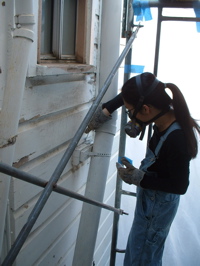
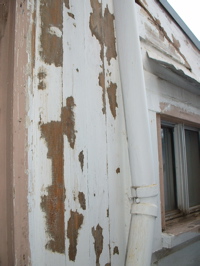
There was peeling paint all over the wall, so we encased the scaffold in plastic to keep all the paint chips in. Below, you can see janeen scraping off the loose paint.

more painting 2more painting 3

Once every loose chip of paint was scraped off, sanded (with a HEPA vacuum attached), cleaned up, and the wall was washed with TSP, we primed and painted it.

more painting 4more painting 1

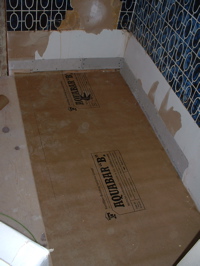
On the inside of the house, I finished off the last piece of wainscot (it will be behind the door). Then, for the second time, I installed the shower receptor. Last time, it lifted up as the moisture in the mortar was absorbed into the wood floor and the floor swelled. After the wood dried, it left the mortar up, holding the shower receptor off the floor, so I had to tear the whole thing out. This time I did it right. I put down moisture barrier paper, then the mortar, and set the receptor into it.

last wainscotshower try 2 paper in

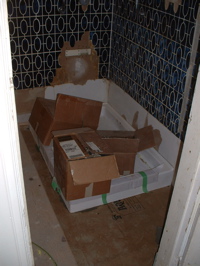
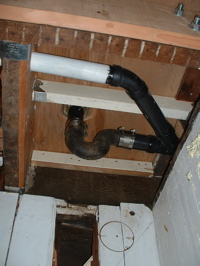
To be sure that it was going to stay flat on the floor, I piled boxes of tile into it. The photo below right shows the drain plumbing for the shower. The white pipe is not PVC – it’s a piece of black ABS pipe that I’m reusing that had been painted white. (You are not supposed to connect ABS pipe to PVC – probably something to do with how they glue). It’s all black cast iron pipe as it exits the building, and the P-trap for the shower is also cast iron.

shower try 2 with boxes of tileshowerplumbing

here are some photos of me painting the walls with the airless paint sprayer..

dscf0027

done plastered

While Janeen filled all the gaps between the backers with plaster, I cut out the gyp board around the base of where the shower receptor (base) will go, and installed cement board that is thinner than the existing board. My goal is to get the receptor to fit slightly into the wall, so that it’s easier to waterproof. We’ll see how that works.

janeen filling gaps in plasterboardbaserepaired

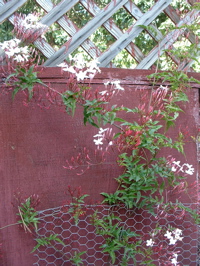
Below left I’m sanding and filling blemishes in the plaster. Cheating! So we started off well. But then I got distracted. First we drove to the plumbing store, and couldn’t find the part we were looking for. Then we went to Flowercraft. I bought three seedlings: a pepper and two tomatoes. the jasmine is already starting to bloom. Amazing to think we plucked a sprig off our neighbor’s plant near our old house, and now we have this!

mathew touching up plasterjasmineflwrs

janeen took the photo on the left to show you how fun it is to wait for bulbs to grow. not here yet. not here yet. still not here. still waiting. grass is growing, though.

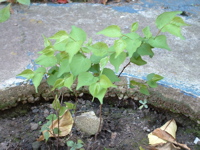
On the right, John’s apricot tree that he gave us has survived. I thought it died, but it’s thriving. actually, it looks like a bunch of saplings.

waitingforbulbsdads tree: apricot

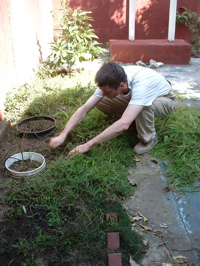
grass: grows only where you don’t want it. getting sidtracked pulling weeds while planting peppers and tomatoes. nice to spend some time outside on such a nice weekend, too.

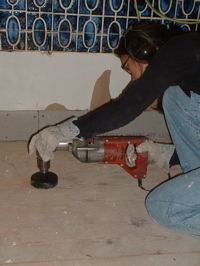
janeen used ‘uncle ken’ to drill a 4″ diameter hole in the floor for the shower drain.

mathew sidetrackedjaneen boring - i mean drilling

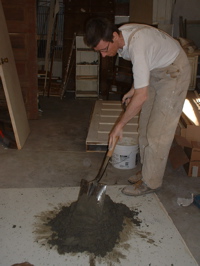
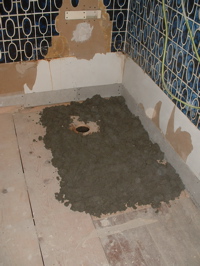
to hold the shower in position and support the base better, we put down a layer of mortar under it. on the photo at right, you can see an error i made: no moisture barrier under the mortar. the water from the mortar has been absorbed by the wood. the wood swelled after we installed the receptor, so it’s not fitting quite right. i’ll give it a couple of weeks to see if the wood shrinks back down. if not: tear out, do it all again, this time right. 🙁

mixing mortarforgot to put moisture barrier

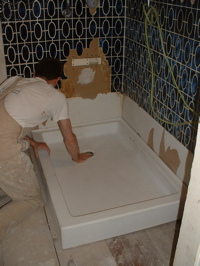
below left: little did I know.

on the right below, i spent a few hours repairing the door frame. When the previous owner’s remodel covered this door, they sawed off part of the frame. I’ve glued and nailed new pieced of wood in the frame to flush it out to the face of the plaster.

installing receptorrepair frame

Below left: using clamps and a biskit to glue two pieces of the door trim, salvaged from the other door, so that I can use it for this door. below right: janeen was a paint stripping machine on Sunday: she almost finished all the wainscoting. you can see a huge stack of pieces she’d already done in the background behind her.

salvage trim for doorjaneen stripping (more paint)

the return of pretty

after figuring out how to transport 4×8 sheets of plywood with a honda civic (cardboard as padding on the roof, rope, and slow driving), I closed up the wall on the laundry room side.

adding wallpapermathew ply

This is actually the exterior wall of the house, and the laundry room has been added at some point — probably as a deck initially, then walls were built around it. The part of the wall I’m filling with plywood is basically the only shear wall on this end of the house. We need a seismic retrofit.

old paintjaneen taping

on the left you see some of the old wood siding. janeen loved the look of it, and all the history of paint colors: the first color looks like a dark forest green, with an olive green over it, then a turquoise, then dark green again, and a layer of off-white cream. should we go back to green?

on the right, janeen is covering the gaps in the gyp board with fiberglass mesh tape. she spent most of the day on saturday sanding all the walls to take the gloss off the paint. after the mesh tape, she painted the walls with pink “plasterweld”…

cutting window framejoining frame

frame donesanding ceiling

on sunday morning, i cut up and reassembled one of the old windows to make a new window for between the bathroom and the laundry room area. we found a great web site that has all sorts of decorative films to apply to glass. We’ll obscure the glass with one of these films.

plasterjaneen taping

janeen continued taping the walls. she used plaster to fill all the holes and gaps in the wall before i started plastering over it all. sorry, there are few photos of janeen from this weekend. janeen loves the drama and speed that things change when plaster goes on:

plasterplaster

plasterplaster ceiling

plastermathew ext finish

by the end of the evening, i’d plastered the three walls above the height of the wainscote. on the right, you can see the closed up wall in the laundry area, and the window waiting to go into its opening where the door used to be.

happy 2009

paintcolors

we spent hours sanding and filling the door taken from the basement. this photo shows where a piece of wood had been used to fill where the door handle had been moved, many years ago. janeen counted the layers of color. it was archeology:

  1. dark green
  2. dark grey green
  3. apple green
  4. dark brown
  5. medium grey
  6. mint green
  7. medium grey (again – i guess they decided they liked the color)
  8. cream
  9. pale turquoise
  10. off white
  11. white

janeenbiskitjoinerscrewing and glueing the door extension

we then added a piece of wood to the bottom of the door. the door from the garage is shorter than the opening upstairs by about 5 1/2″. We just added a piece of 2×6 from my offcuts pile onto the bottom of the door. janeen used the biscuit joiner to cut slots for wood ‘biskits’ that will hold the new piece of wood to the bottom of the door. she also screwed in two 6″ long bolts to help clamp the wood while the glue dried.

it’s not ideal. panel doors are built with vertical pieces on each side, and horizontal pieces connected between them. the vertical side members help to prevent the horizontal pieces from warping. the piece we added has no vertical pieces, so it may warp. the bolts may help. we’ll see.

woodshavings_20090103dumpy's palace

the next day, i planed the wood flush with the face of the door.

above right: dumpy has a palatial new home. janeen finished off most of the trim painting in the front entry foyer.

begin demo of closet doorlookingupcloset_20090103

meanwhile, i tore out the makeshift ceiling and walls in the closets between the bedroom and the living room and framed in a wall between the living room and the bedroom. our plan is to create a bookshelf on the living room side, and a closet on the bedroom side out of this short passage between the rooms.

I made a hatch to get at the space over the closet in case I need to get to the plumbing under the bathroom above, and added in wiring for a light in each of the three closets.

janeensviewframing closet

above left: the view janeen saw of me on new years day. on the right, the framing is installed.

installing gypcloset ceiling

we got most of the gyp board on.

janeenfastdoorsjaneendoors

janeen painting the trim around the living room doors.

halllightclosehall light

i cleaned up the light in the entry hallway. you’ll have to look back to see how it looked before. but i really like the retro patterned glass. i also painted the cover plate at the top of the light to match the walls: janeen calls it a Mercedes hubcap.

bathroom doorbathroom door open

ok, one last thing: this door between the bedroom and the bathroom was closed up. we are planning to re-open it. here you can see how insulation and a wall was framed in front of the door. get ready for ugly.